Supervisor: Prof. Annette Scholz
Photos / Videos: Matthias Koch
Editing: Axel Warg
Software: VVVV Gamma
The Glücksorgan was part of the project »Frück« at Burg Giebichenstein University of Art and Design.
The Glücksorgan (German for Happiness Organ) is an interactive installation that brings emotions into the physical realm, making them experiential through a human body interface. Inspired by the idea of locating happiness within the body, the concept of the body itself as the happiness organ emerged from a study depicting emotions in the human body.
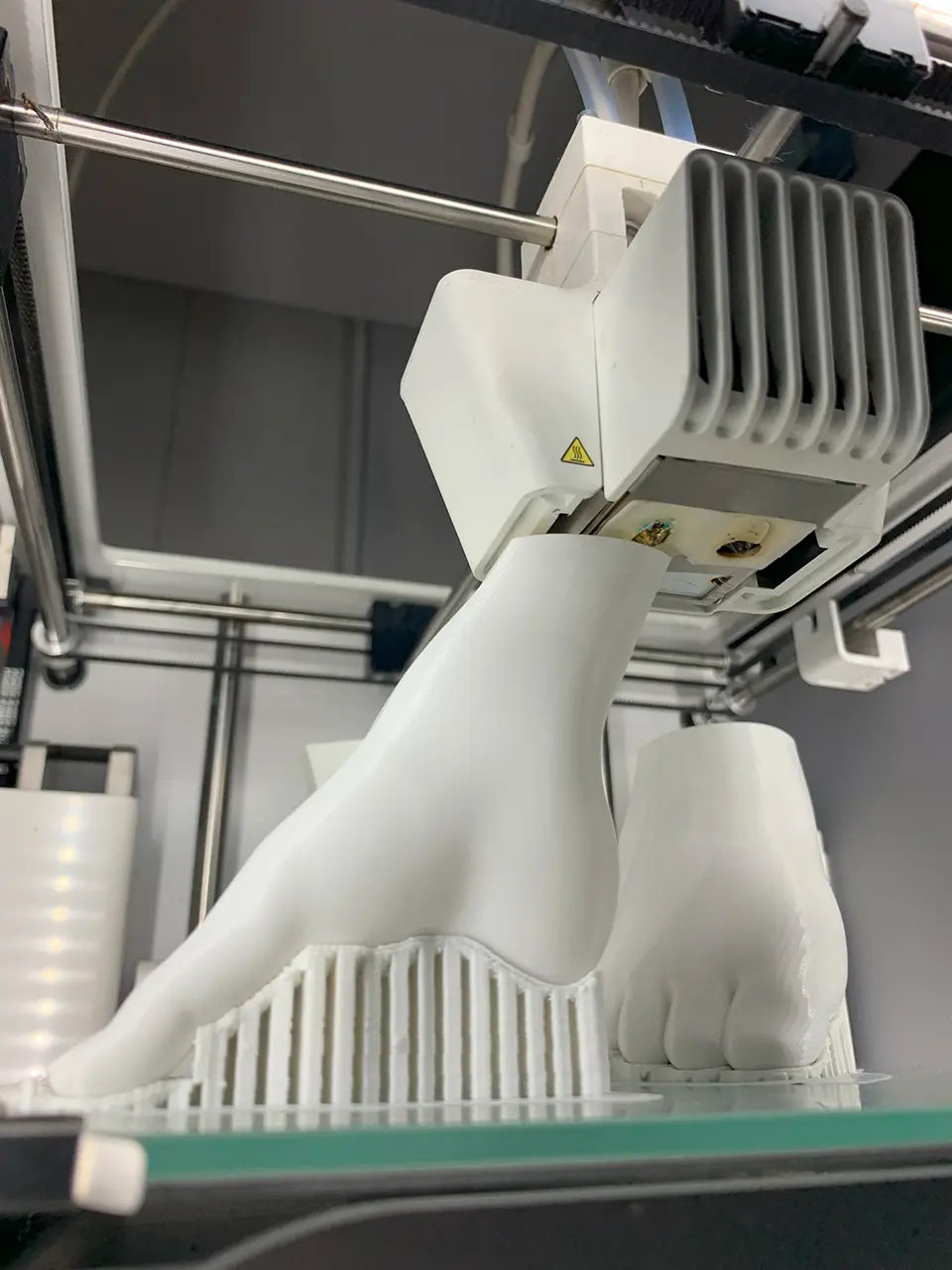
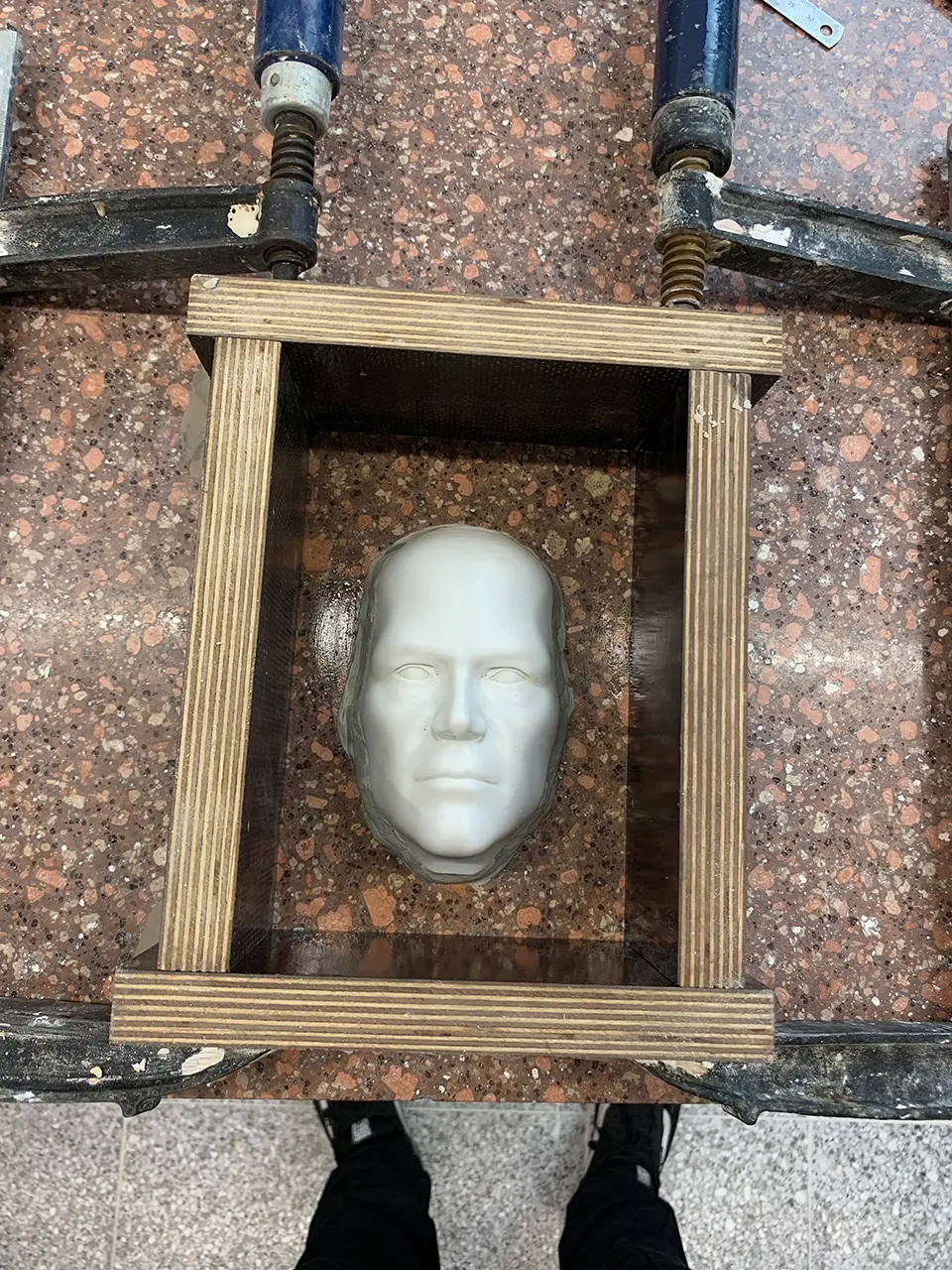
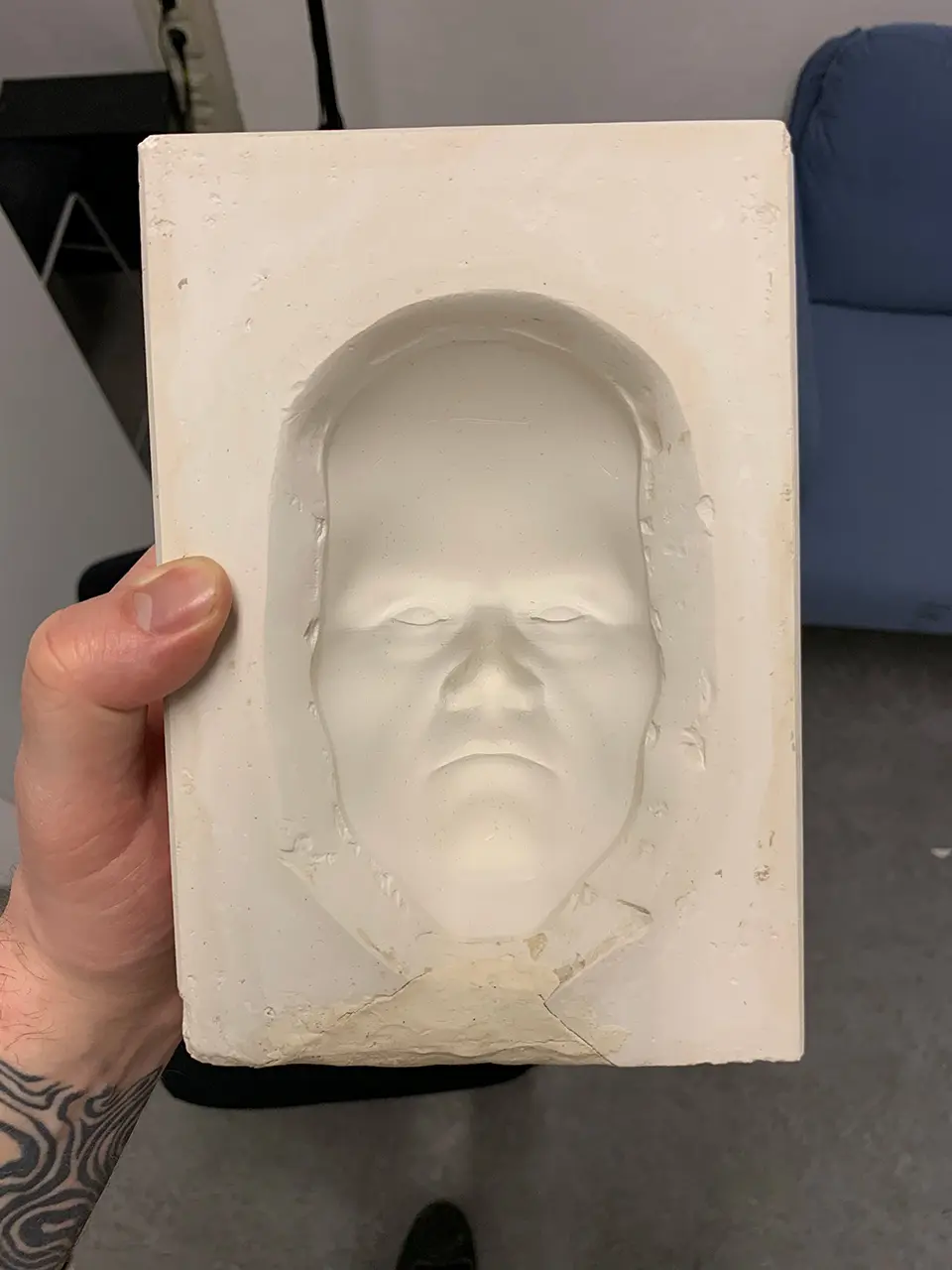
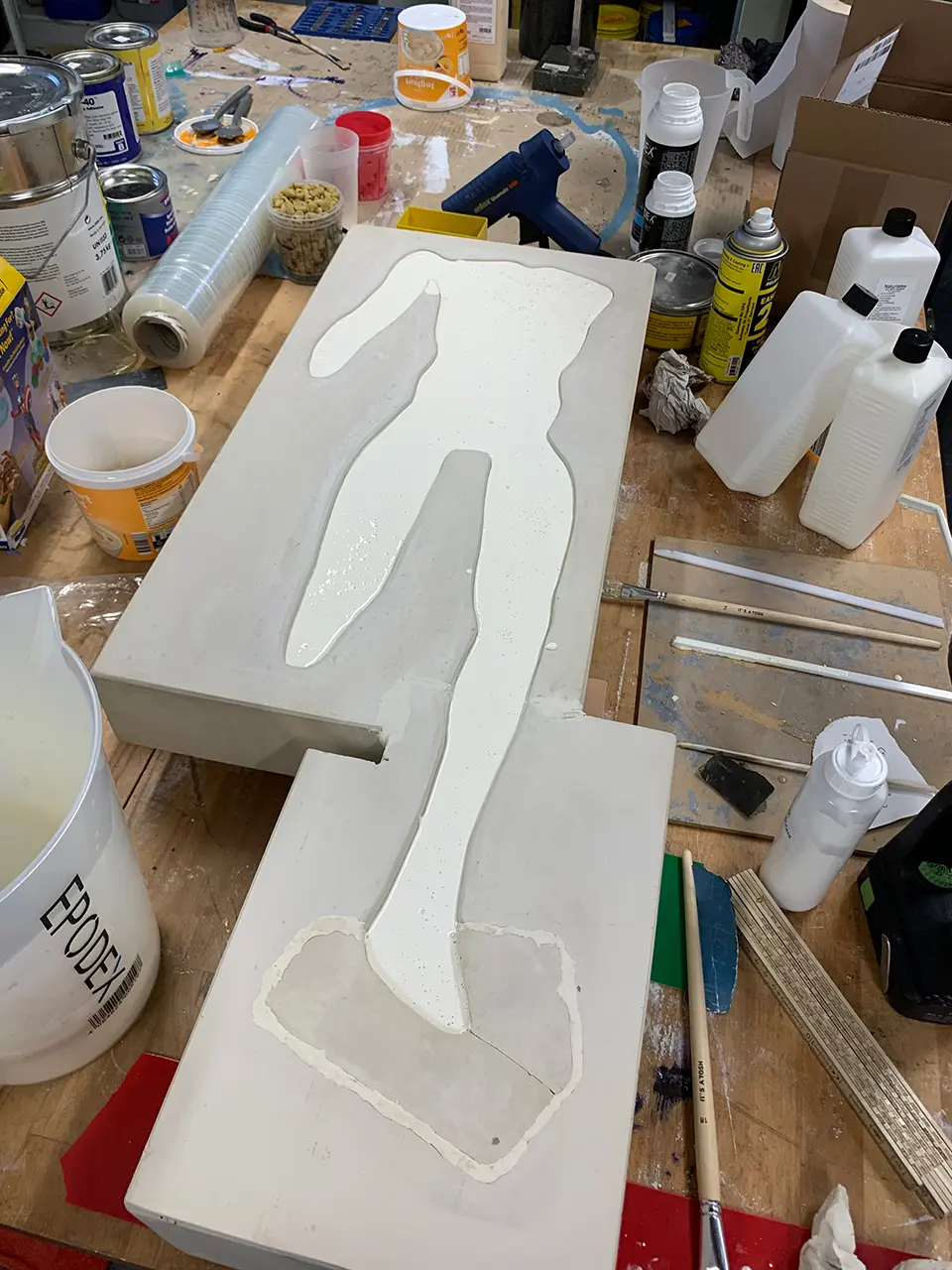
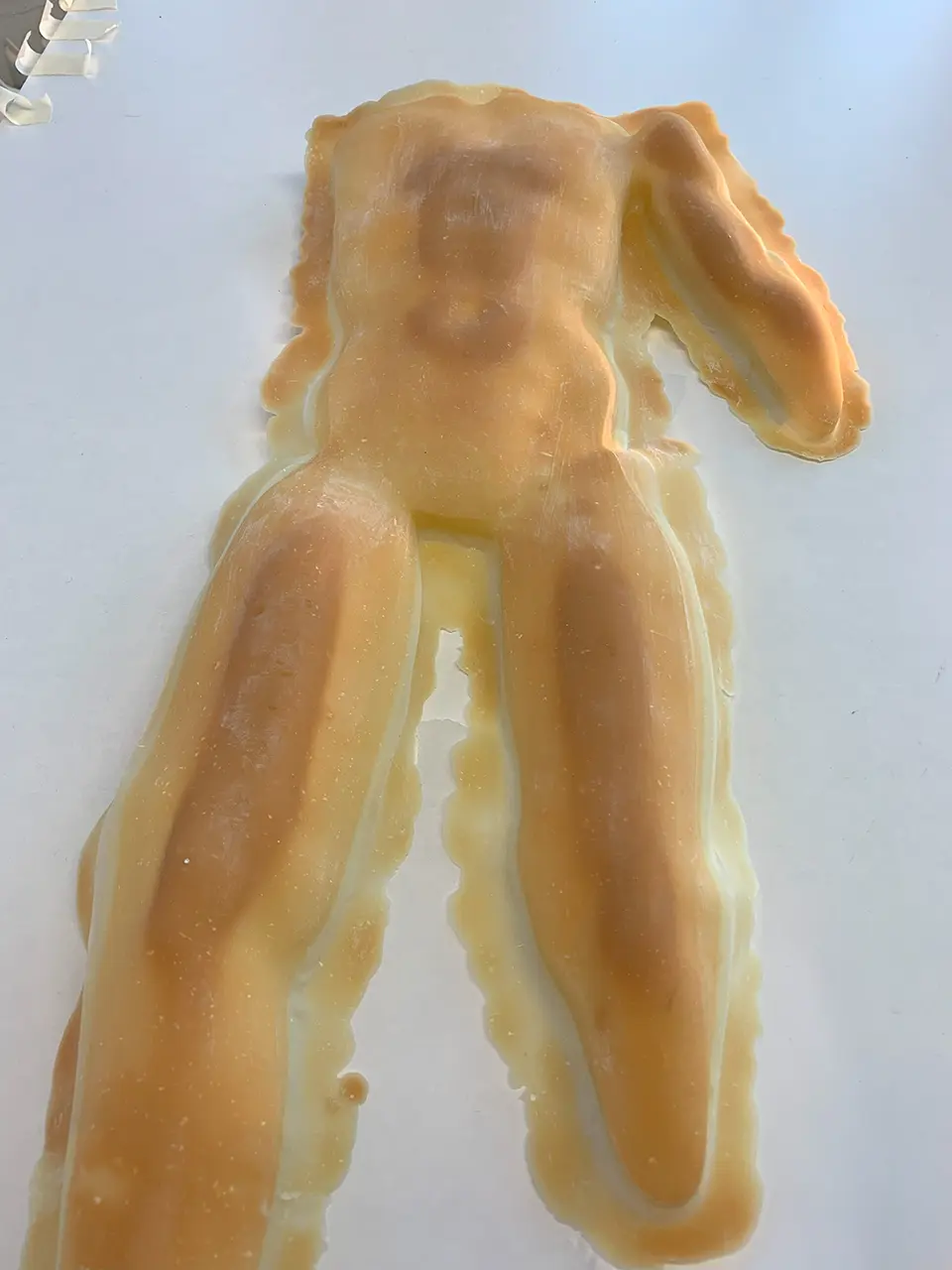
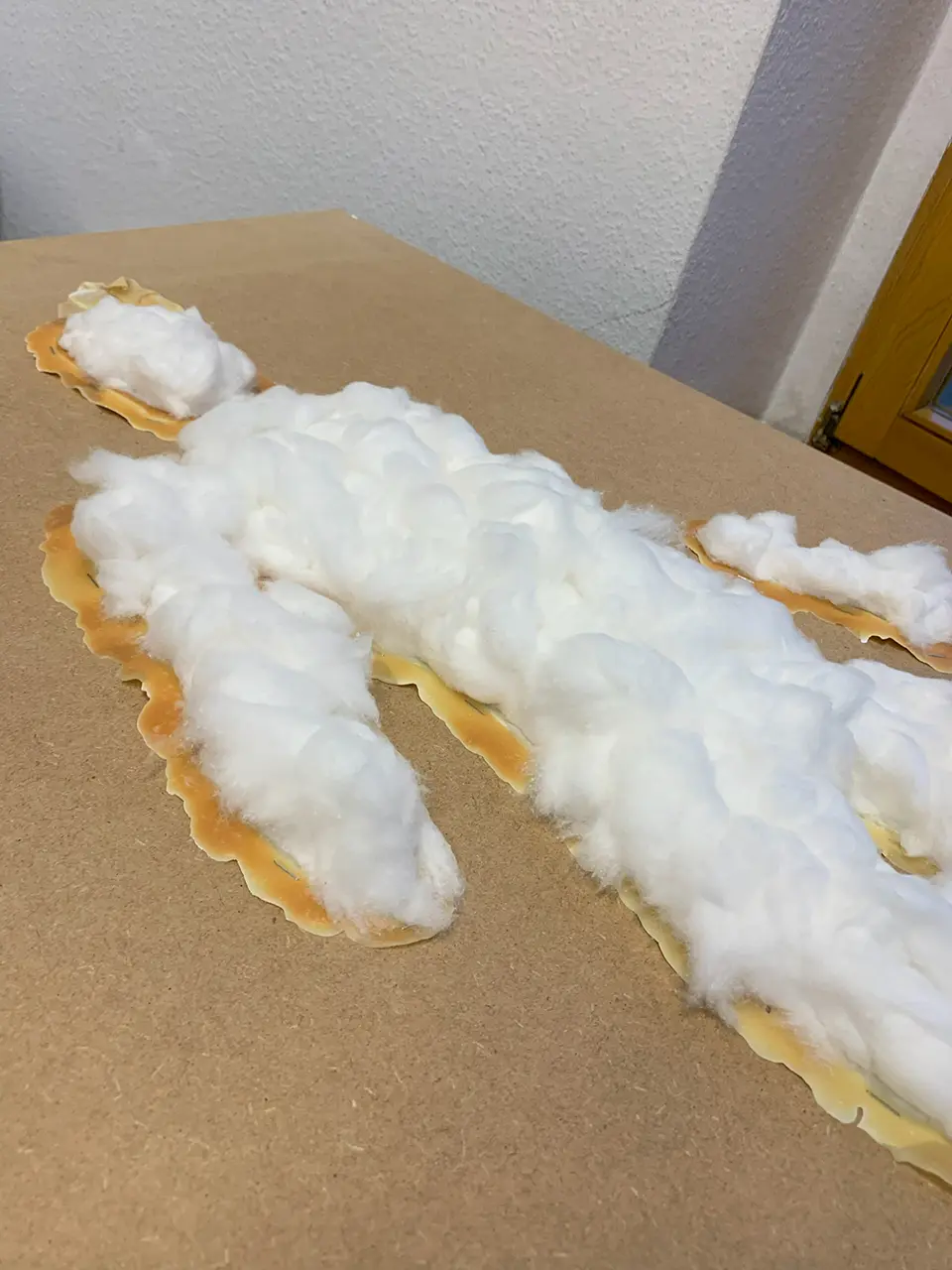
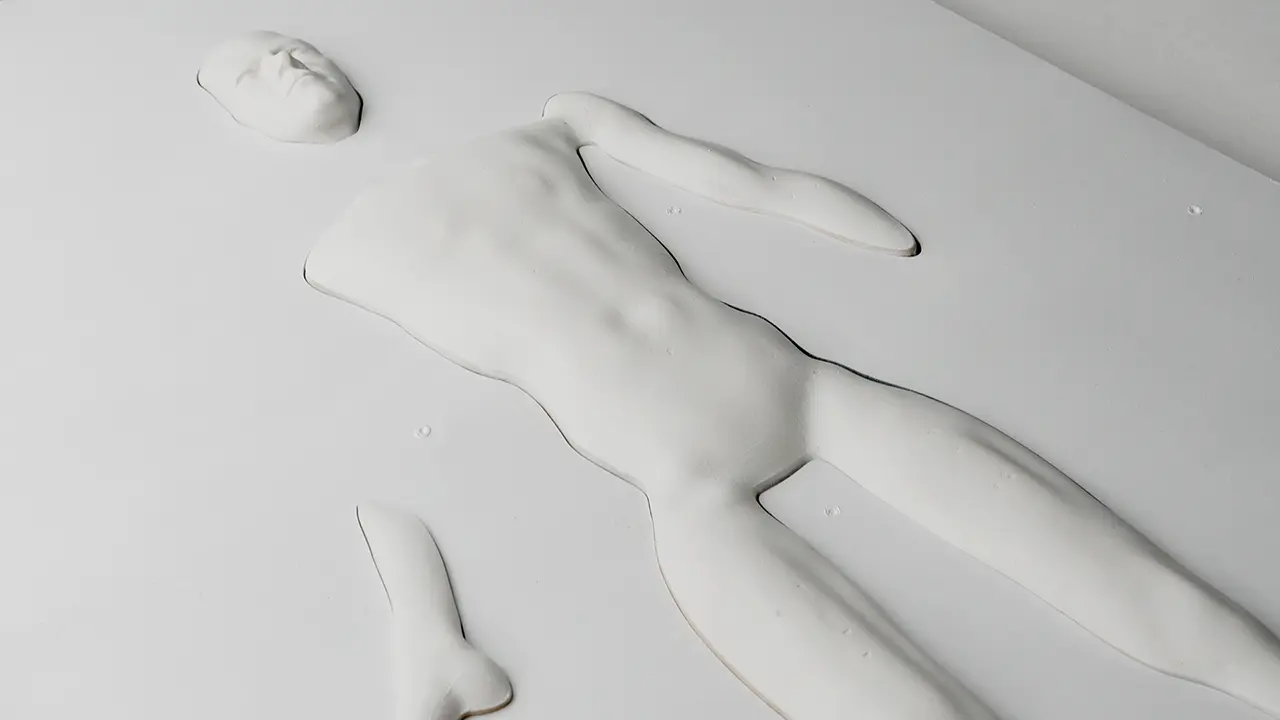
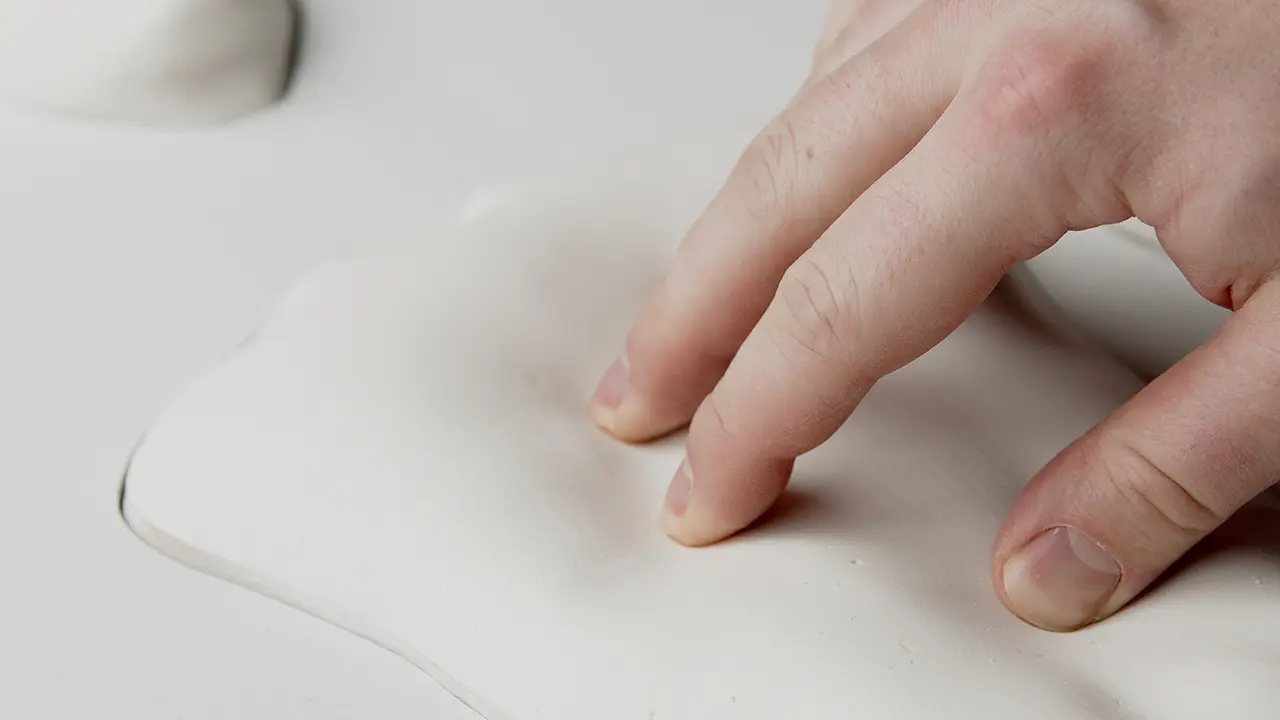
Utilizing Projection-Mapping on a human body as an interface, hours were spent experimenting with materials, employing 3D printing for body parts. Creating tactile surfaces involved molding with latex, providing a lifelike feel with interactive buttons beneath, offering a unique organic touch.
* Bodily maps of emotions (n=701) - doi.org/10.1073/pnas.1321664111.
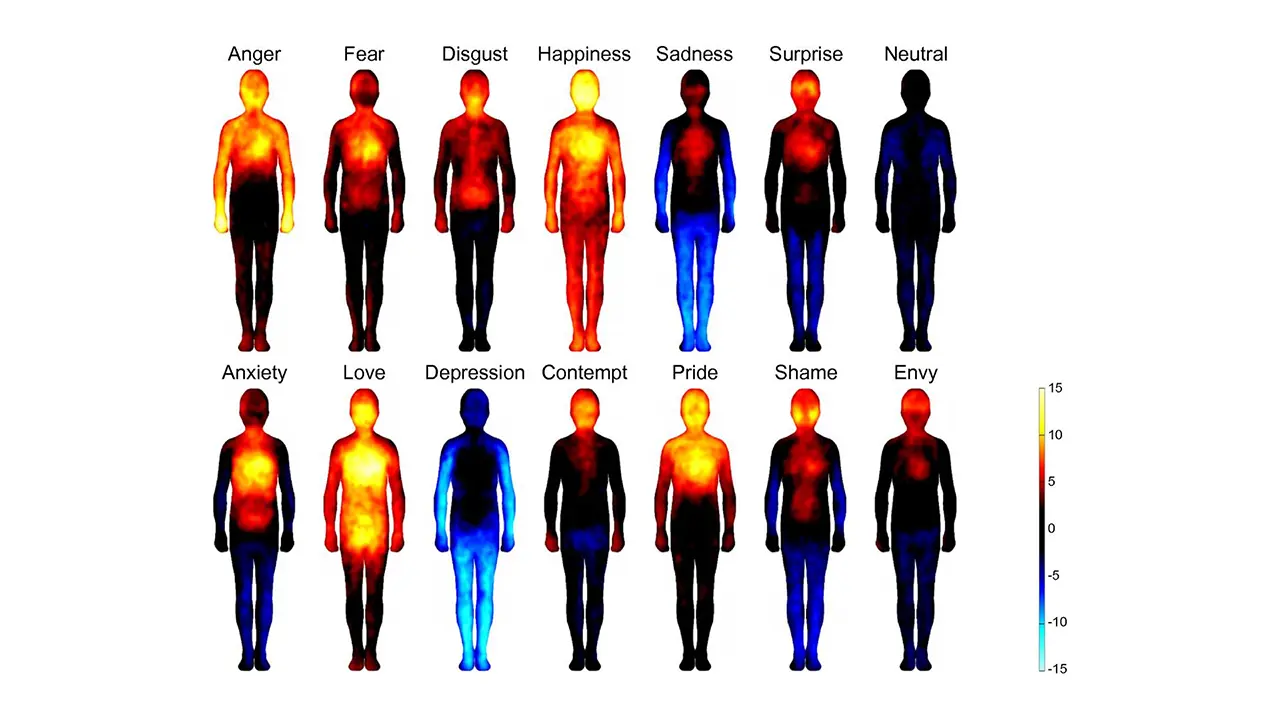
According to scientists, emotions are associated with discrete areas in the body. *
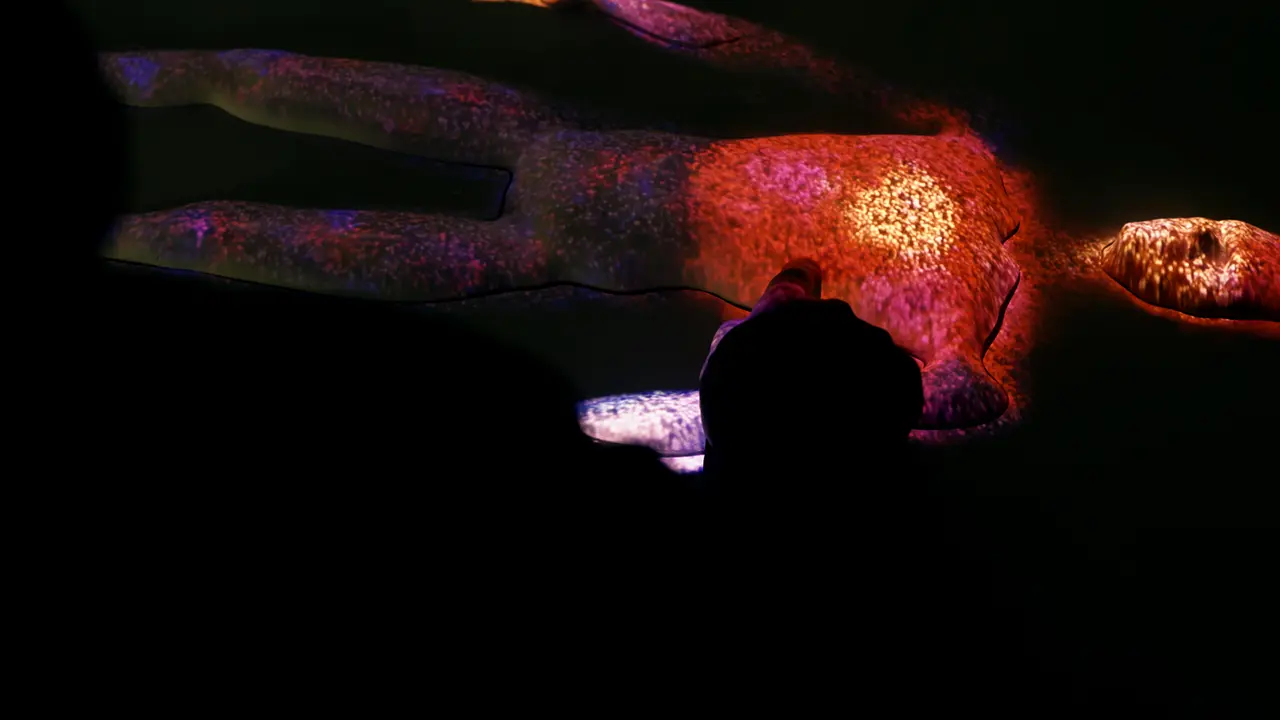


A GPU-based implementation allows real-time manipulation of the underlying fluid simulation of the prototype.
Through various iterations, a real-time particle animation for the projection was developed, representing the energetic flow within the body influenced by emotions. Particle direction and color temperature indicate the impact of emotions on body energy, with cool colors and particle dispersion signaling weakened energy, while warm colors and particle accumulation suggest increased vitality.
As users approach, the emotional state remains concealed behind a dark texture, unveiling only upon touching the body. Interaction progressively reveals emotions until the full extent is visible, after which the emotion dissolves, and the installation resets.
This immersive experience offers a glimpse into the intricate relationship between emotions and the human body, engaging users in a tactile and visual exploration.
The Glücksorgan (German for Happiness Organ) is an interactive installation that brings emotions into the physical realm, making them experiential through a human body interface. Inspired by the idea of locating happiness within the body, the concept of the body itself as the happiness organ emerged from a study depicting emotions in the human body.
Utilizing Projection-Mapping on a human body as an interface, hours were spent experimenting with materials, employing 3D printing for body parts. Creating tactile surfaces involved molding with latex, providing a lifelike feel with interactive buttons beneath, offering a unique organic touch.
* Bodily maps of emotions (n=701) - doi.org/10.1073/pnas.1321664111.

According to scientists, emotions are associated with discrete areas in the body. *


A GPU-based implementation allows real-time manipulation of the underlying fluid simulation of the prototype.
Through various iterations, a real-time particle animation for the projection was developed, representing the energetic flow within the body influenced by emotions. Particle direction and color temperature indicate the impact of emotions on body energy, with cool colors and particle dispersion signaling weakened energy, while warm colors and particle accumulation suggest increased vitality.
As users approach, the emotional state remains concealed behind a dark texture, unveiling only upon touching the body. Interaction progressively reveals emotions until the full extent is visible, after which the emotion dissolves, and the installation resets.
This immersive experience offers a glimpse into the intricate relationship between emotions and the human body, engaging users in a tactile and visual exploration.
Supervisor: Prof. Annette Scholz
Photos / Videos: Matthias Koch
Editing: Axel Warg
Software: VVVV Gamma
The Glücksorgan was part of the project »Frück« at Burg Giebichenstein University of Art and Design.